
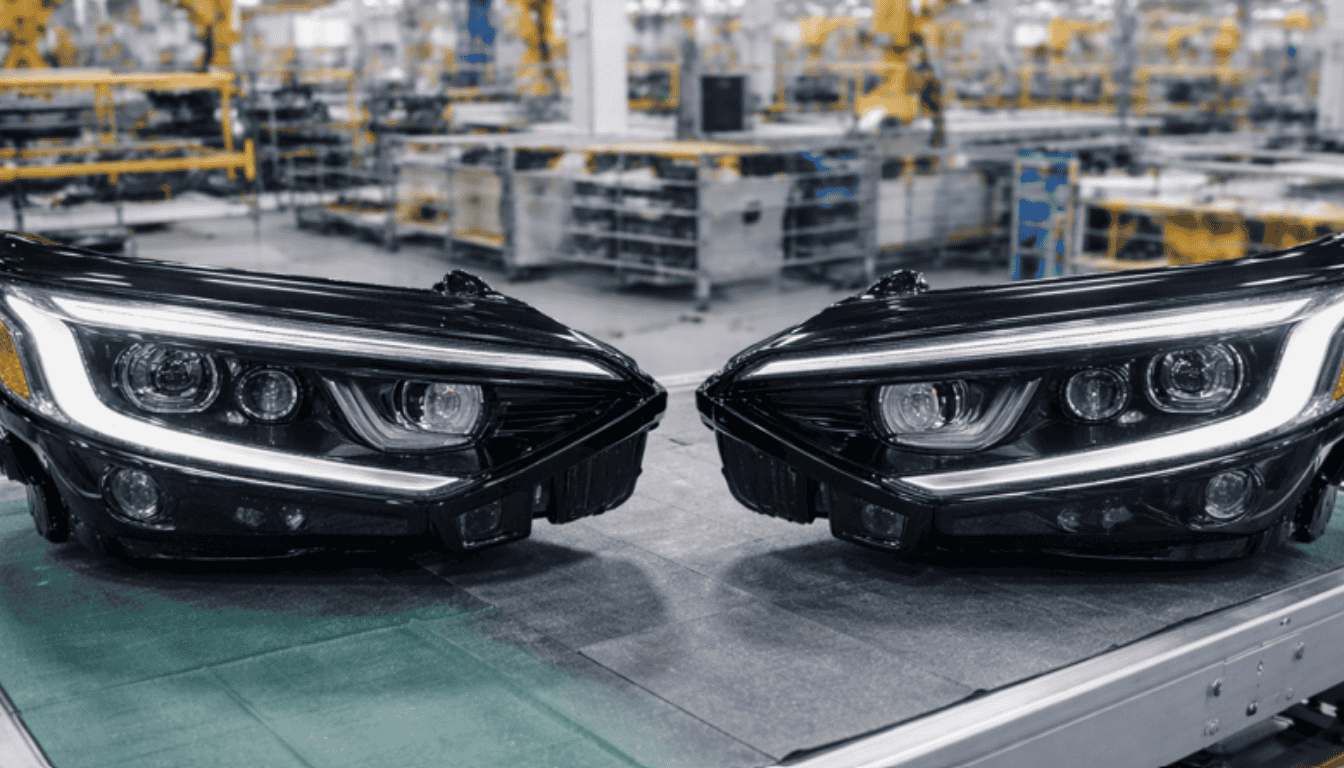
In the automotive industry, plastic injection molding is no longer judged solely by output volume or cost efficiency.
For OEMs and Tier suppliers, quality control in injection molding has become a critical factor that directly impacts vehicle safety, regulatory compliance, supply chain stability, and long-term program success.
Automotive plastic components must meet strict dimensional tolerances, functional reliability, and durability requirements, often across millions of production cycles.
As a result, injection molding quality control is not just an inspection activity, but a structured system that integrates engineering, process control, documentation, and continuous improvement.
This article explains how quality control works in automotive plastic injection molding, the key standards you should know, and what separates a basic supplier from a true manufacturing partner.
What Is Quality Control in Injection Molding?
Quality control injection molding refers to the systematic activities used to ensure that molded plastic parts consistently meet defined specifications and customer requirements. In automotive programs, quality control is applied throughout the entire manufacturing lifecycle, not only at the final inspection stage.
It is important to distinguish:
1. Quality Assurance (QA): System-level planning, standards, and preventive controls
2. Quality Control (QC): Operational checks, measurements, and verification during production
In automotive injection molding, QC is embedded into every phase, from material handling to mass production, with a strong emphasis on traceability and repeatability.
Key Quality Control Stages in Automotive Injection Molding
1. Incoming Material Inspection
Quality begins with raw material control. Automotive-grade plastic resins must meet precise specifications for mechanical, thermal, and chemical properties.
Typical incoming inspection includes:
- Verification of resin grade and supplier certification
- Melt Flow Index (MFI) testing
- Moisture content measurement (critical for PA, PC, and other hygroscopic materials)
- Color consistency and contamination checks
Without strict material control, even a well-designed mold and process cannot deliver consistent quality.
2. In-Process Quality Monitoring
In-process control is the backbone of injection molding quality control. Rather than relying solely on end-of-line inspection, automotive manufacturers monitor critical parameters in real time, such as:
- Melt temperature
- Injection and holding pressure
- Cycle time
- Cooling time
Statistical Process Control (SPC) is widely used to detect trends before defects occur. By analyzing process data, manufacturers can prevent deviations that lead to warpage, sink marks, or dimensional drift.
This proactive approach is a key expectation from OEMs and Tier suppliers.
3. Final Product Inspection
Final inspection verifies that molded parts meet dimensional, visual, and functional requirements before shipment.
Common inspection methods include:
- Dimensional measurement using CMM (Coordinate Measuring Machine)
- Visual and surface defect inspection
- Mechanical and functional testing where required
Sampling plans are typically defined based on customer requirements and risk level, ensuring consistent quality without disrupting production flow.
Quality Inspection Tools and Technologies
Automotive injection molding relies on advanced inspection technologies to meet tight tolerances and documentation requirements, including:
- CMM and 3D scanning for dimensional accuracy
- Optical comparators for profile inspection
- Surface roughness testers
- Automated vision systems for high-volume inspection
These tools enable objective, repeatable measurements that support both quality control and customer audits.
Standards and Certifications You Should Know
ISO 9001:2015 – Quality Management System
ISO 9001 establishes a structured framework for consistent processes, documentation, and continuous improvement. It ensures that quality control activities are standardized and auditable.
IATF 16949:2016 – Automotive Quality Standard
IATF 16949 is the core quality standard for automotive manufacturing. It emphasizes:
- Defect prevention
- Risk-based thinking
- Process capability and control
- Traceability and documentation
Compliance with IATF 16949 is often mandatory for OEM and Tier supplier programs.
Supporting Automotive Quality Tools
In addition to certifications, automotive injection molding programs typically require:
- Control Plans
- PFMEA (Process Failure Mode and Effects Analysis)
- MSA (Measurement System Analysis)
- PPAP and ISIR documentation
These tools ensure that quality is designed into the process, not inspected afterward.
Process Capability and Quality Metrics
Automotive customers often require proof of process capability, not just pass/fail inspection results. Metrics such as Cpk demonstrate a process’s ability to consistently produce parts within tolerance.
A stable, capable process:
- Reduces scrap and rework
- Minimizes downtime
- Supports long-term production programs
This is why injection molding quality control must be data-driven and continuously monitored.
Common Injection Molding Quality Issues and How QC Prevents Them
Without effective quality control, injection molding processes are vulnerable to:
- Warpage and shrinkage variation
- Sink marks and short shots
- Flash and burn marks
- Dimensional inconsistency
By combining proper material selection, mold design validation, SPC monitoring, and preventive maintenance, these issues can be significantly reduced or eliminated.
Traceability and Documentation in Automotive Programs
Traceability is a non-negotiable requirement in automotive manufacturing. Quality control systems must enable:
- Material batch traceability
- Process parameter history
- Inspection records and audit readiness
This level of documentation protects OEMs and Tier suppliers from recall risks and supply chain disruptions.
Choosing a Quality-Focused Injection Molding Partner
For automotive programs, selecting a supplier based only on price or machine capacity can lead to hidden costs. A qualified injection molding partner should demonstrate:
- Proven automotive experience
- Robust quality control systems
- Relevant certifications and audit readiness
- Engineering support and process stability
Quality control capability is a direct indicator of long-term reliability.
Banshu Plastic Indonesia: Engineering-Driven Quality Control
Banshu Plastic Indonesia is an automotive plastic injection molding manufacturer focused on engineering-based quality control rather than reactive inspection.
With over 20 years of experience, Banshu Plastic supports OEM and Tier supplier programs through:
1. Structured injection molding quality control systems
2. Advanced inspection and SPC implementation
3. Precision mold and tooling management
4. Stable mass production for long-term automotive programs
Located in Jababeka Industrial Park, Cikarang, Bekasi Regency, West Java, Indonesia, Banshu Plastic operates in one of Indonesia’s key automotive manufacturing hubs.
Banshu Plastic is certified to IATF 16949:2016, ISO 9001:2015, and ISO 14001:2015, reflecting its commitment to quality, consistency, and environmental responsibility.
Quality control in automotive plastic injection molding is not optional, it is a strategic requirement.
Understanding injection molding quality control standards, tools, and processes enables OEMs and Tier suppliers to reduce risk, improve consistency, and secure long-term production success.
If you are evaluating injection molding partners for automotive programs, choose one that treats quality control as an engineering discipline, not just a final checkpoint.