
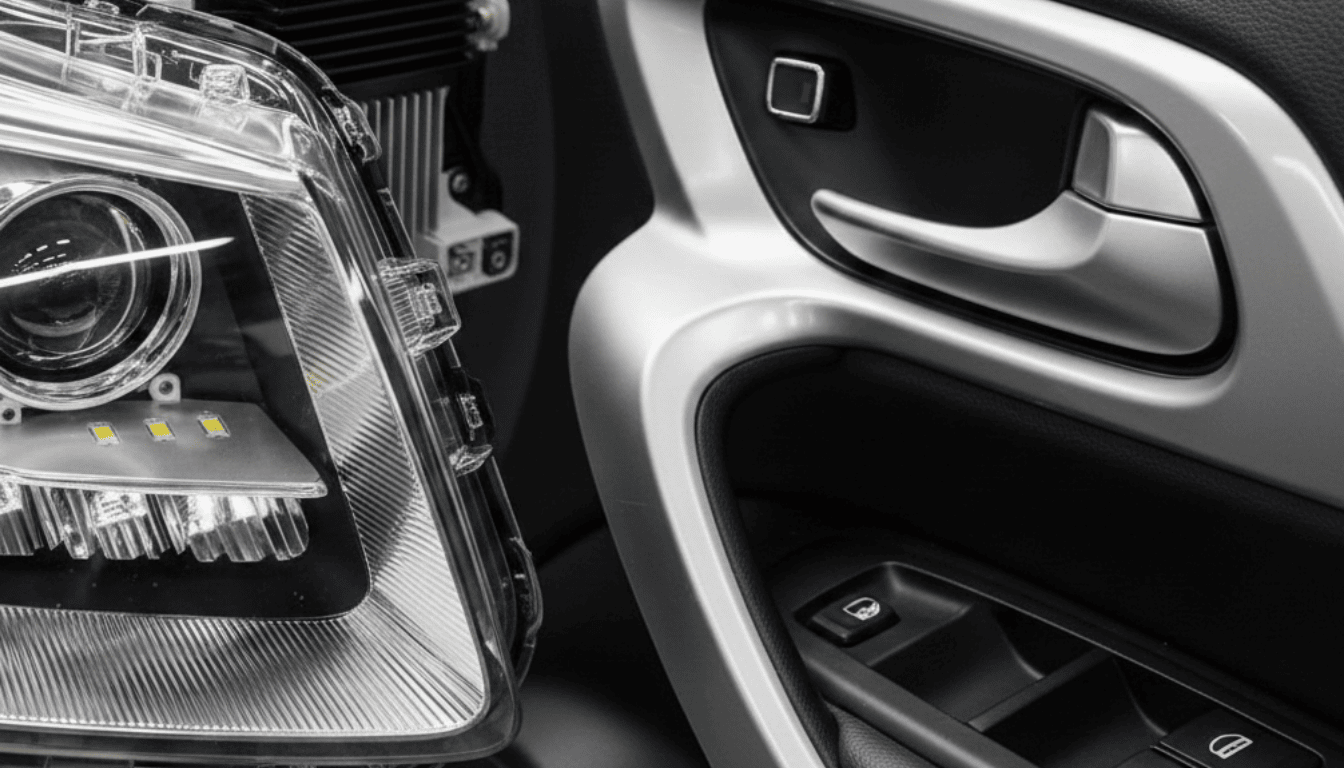
In today’s automotive manufacturing landscape, injection molded parts are no longer categorized as secondary or purely cosmetic components.
They have evolved into engineered elements that directly influence vehicle performance, manufacturability, and lifecycle cost.
Plastic components produced through injection molding now contribute to:
1. Vehicle lightweighting strategies
2. Functional system integration
3. Assembly line efficiency
4. Long-term production consistency
With the rapid shift toward electrification, tighter emission regulations, and global platform standardization, automotive plastic injection molding has become a critical manufacturing discipline, rather than a routine production method.
For OEMs and Tier suppliers developing injection molding automotive parts, the real challenge is not finding molding capacity. The challenge is selecting a manufacturing partner capable of delivering:
1. Engineering-grade dimensional accuracy
2. Tooling durability across multi-million shot programs
3. Stable process capability (Cpk/Ppk)
4. Lifecycle production reliability
A misalignment in any of these areas can compromise entire vehicle programs.
Why Injection Molded Parts Dominate Modern Automotive Manufacturing
Plastic injection molding aligns exceptionally well with the operational and commercial priorities of automotive OEMs. Its dominance is not accidental, it is driven by technical and economic logic.
1. Lightweight Solutions for Efficiency and Electrification
Weight reduction remains a primary objective in both internal combustion and electric vehicles. By replacing metal components with engineering plastics, manufacturers achieve:
a. Improved fuel economy
b. Extended EV driving range
c. Reduced structural mass
Case Perspective:
In an EV battery support module redesign, converting selected brackets from stamped steel to glass-filled polypropylene reduced component weight while maintaining stiffness requirements, contributing to overall vehicle efficiency targets.
2. High Design Flexibility and Functional Integration
Injection molding enables complex geometries and integrated features such as:
a. Snap-fits
b. Ribs and gussets
c. Mounting bosses
d. Cable routing channels
This multi-function integration reduces part count and simplifies assembly.
Practical Impact:
Combining multiple sub-components into a single molded part can eliminate fasteners, reduce assembly time, and lower cumulative tolerance stack-up risk.
3. Dimensional Precision at High Production Volumes
Automotive programs demand consistent dimensional performance across millions of cycles. Injection molding provides:
a. Tight tolerance capability
b. High repeatability
c. Controlled shrinkage behavior
d. Cavity-level traceability
When supported by proper mold design and statistical process control, the process achieves stable long-term dimensional integrity.
4. Cost Efficiency Across Long-Term Programs
Although tooling investment can be significant, injection molding delivers strong cost advantages over long production runs through:
a. Short cycle times
b. Low per-unit cost at scale
c. Reduced secondary operations
d. Material efficiency
In high-volume automotive platforms, this cost structure becomes strategically advantageous.
5. Compatibility with Global OEM Standards
Automotive injection molding integrates seamlessly with global quality frameworks such as:
a. IATF 16949
b. ISO 9001
c. ISO 14001
Compliance with these systems ensures:
a. Structured process control
b. Risk-based quality management
c. Environmental responsibility
d. Continuous improvement culture
A Manufacturing Discipline That Supports Entire Vehicle Systems
Because of these technical and operational advantages, automotive injection molding is widely applied across:
1. Interior trim and instrument systems
2. Exterior components and structural trims
3. Under-the-hood functional parts
4. EV battery and electronic module housings.
Its versatility, scalability, and engineering adaptability make it indispensable to modern vehicle architecture.
In practical terms, injection molded components are no longer peripheral elements. They are engineered solutions that support performance targets, regulatory compliance, and production efficiency across global automotive platforms.
Main Applications of Injection Molded Parts in the Automotive Industry
In modern vehicle development, injection molded components are integrated across nearly every system, interior, exterior, powertrain, electronic, and structural support.
Their role is no longer limited to cosmetic applications; they are engineered parts designed to meet mechanical, thermal, and lifecycle performance targets.
Below is a structured overview of the primary application areas
1. Automotive Interior Components
Interior systems represent one of the largest volume segments for plastic injection molded parts. However, interior applications are not merely aesthetic, they must meet strict requirements for:
a. Dimensional accuracy
b. Surface quality and texture consistency
c. Ergonomic performance
d. Long-term durability under thermal cycling
e. Assembly efficiency in high-speed production lines
Typical Interior Applications:
a. Dashboard components
b. Interior trim panels
c. Overhead consoles
d. Door panels
e. Interior door handles
f. Gear shift covers
g. Seat adjustment levers
Materials such as ABS, PC-ABS, and reinforced PP compounds allow engineers to integrate ribs, clips, bosses, and snap-fit mechanisms into a single molded structure.
Engineering Perspective:
By consolidating multiple sub-components into one injection molded part, OEMs reduce part count, minimize tolerance stack-up, and shorten assembly time. This directly improves line efficiency and reduces long-term warranty risk, an essential factor in high-volume vehicle platforms.
2. Automotive Exterior Components
Exterior applications introduce significantly harsher environmental exposure compared to interior systems. Components must maintain structural and visual integrity under:
a. Continuous UV radiation
b. Rain, humidity, and temperature fluctuation
c. Road debris impact
d. Long-term weathering
Common Exterior Applications:
a. Bumpers
b. Grilles
c. Over fenders
d. Side skirts
e. Headlamp housings and lenses
f. Side mirror housings
g. Wiper system components
h. Spoilers
Through automotive injection molding, traditional stamped metal parts are increasingly replaced by PP compounds, ASA, and reinforced engineering plastics. These materials provide:
a. Corrosion resistance
b. Weight reduction
c. Design flexibility
d. Cost efficiency in mass production
Critical Success Factor:
Exterior part reliability depends heavily on robust mold design, uniform cooling systems, and stable processing windows. Warpage control and surface defect prevention must be engineered at the tooling stage, not corrected after SOP.
3. Under-the-Hood Components
Under-the-hood applications represent one of the most technically demanding environments for injection molded automotive parts.
Components must withstand:
a. Continuous elevated temperatures
b. Engine vibration and fatigue loading
c. Exposure to fuel vapor, oil, coolant, and chemicals
d. Long-term mechanical stress
Typical Applications:
a. Intake manifolds
b. Air filter housings
c. Cooling system housings
d. Engine covers
f. Fluid reservoirs
g. Fuse boxes
h. Valve covers
i. Battery trays and protective covers
Engineering plastics such as glass fiber, reinforced PA (nylon) and PBT are commonly used to meet these performance requirements.
At this level, design and process decisions, such as gate placement, fiber orientation control, mold cooling balance, and cavity pressure monitoring, directly affect:
a. Mechanical strength
b. Dimensional stability
c. Thermal resistance
d. Production repeatability
A weak tooling strategy in under-the-hood applications often results in early field failures.
4. Precision Functional and Mechanical Components
Many automotive systems depend on high-precision injection molded parts that operate through millions of motion cycles without dimensional drift.
Typical Applications:
a. Speedometer gears
b. Power window gears
c. Door lock actuators
d. Fuel pump housings
Materials such as POM (acetal) and other high-performance engineering plastics are selected for:
a. Low friction coefficients
b. Excellent wear resistance
c. High stiffness
d. Dimensional accuracy
Lifecycle Consideration:
In precision applications, mold quality, cavity balance, and preventive maintenance planning determine long-term gear mesh accuracy and mechanical noise performance. Tool wear must be proactively managed to maintain tolerance control.
5. Electrical and EV Components
With the rapid expansion of electric and hybrid vehicles, injection molding has become fundamental to electrical insulation and high-voltage system protection.
Key Applications:
a. Battery module housings
b. High-voltage connectors
c. Control unit enclosures
d. Insulation and protective covers
These components require materials offering:
a. High thermal stability
b. Electrical insulation performance
c. Flame-retardant compliance
d. Dimensional stability under heat
Production must be executed within tightly controlled parameters to meet stringent automotive safety and reliability standards, especially for EV battery systems where thermal management is critical.
What OEMs and Tier Suppliers Should Expect from Automotive Injection Molding Companies
Not every injection molding company is prepared to support the complexity of automotive programs. Long-term vehicle platforms require structured systems and engineering discipline.
A qualified automotive injection molding partner must demonstrate:
1. Proven experience in automotive manufacturing environments
2. Strong engineering capability and material expertise
3. Controlled mold and tooling management systems
4. Stable, repeatable mass production performance
5. Long-term commitment to OEM and Tier program lifecycle requirements
Selecting a supplier based solely on piece price often results in hidden costs, including:
1. Excessive scrap and rework
2. Unplanned downtime
3. Audit non-conformities
4. Escalating mold repair expenses
5. Supply chain instability
For OEMs, injection molding is not just about producing plastic parts. It is about ensuring production continuity, protecting brand reputation, and maintaining quality performance across global vehicle platforms.
Banshu Plastic: An Engineering-Driven Automotive Injection Molding Partner
Banshu Plastic Indonesia is an automotive plastic injection molding manufacturer supporting OEMs and global industries through engineering-driven manufacturing solutions.
With more than 20 years of experience, Banshu Plastic delivers expertise in automotive injection molding, engineering plastic applications, precision injection mold and tooling development, and stable mass production for long-term programs.
Operating from Jababeka Industrial Park, Cikarang, Bekasi Regency, West Java – Indonesia, Banshu Plastic is strategically located within one of Indonesia’s key automotive and manufacturing hubs.
As an active member of IMDIA (Indonesia Mold & Dies Industry Association), Banshu Plastic is closely connected to the national mold and dies ecosystem, allowing continuous alignment with industry best practices, tooling technology advancements, and evolving quality expectations across global automotive supply chains.
Banshu Plastic’s manufacturing operations are supported by internationally recognized management systems, including ISO 9001:2015 for quality management, IATF 16949:2016 for automotive quality systems, and ISO 14001:2015 for environmental management, reinforcing our commitment to consistent quality, regulatory compliance, and sustainable manufacturing practices.
Looking for More Than Just an Injection Molded Parts Supplier?
If your organization is developing injection molding automotive parts, evaluating automotive injection molding companies, or preparing long-term OEM or Tier supplier programs, production capacity alone is not enough.
You need a manufacturing partner that understands engineering risk, quality expectations, compliance requirements, and long-term production stability.
Contact Banshu Plastic to discuss how your automotive injection molded parts programs can be supported with higher consistency, lower operational risk, and scalable manufacturing readiness.